Dwarves in this campaign have early black-powder firearms; that was a setting decision made on day five ("they need a rifle unit for sure"). The Ironforge Sharpshooter is the Bronzebeard route's rifle unit, trained at the Foundry Annex, and the open question was what it carries with the rifle. The answer, given on the Codex side of the project and recorded from there: a shield and a rifle, not a shield and a bow.
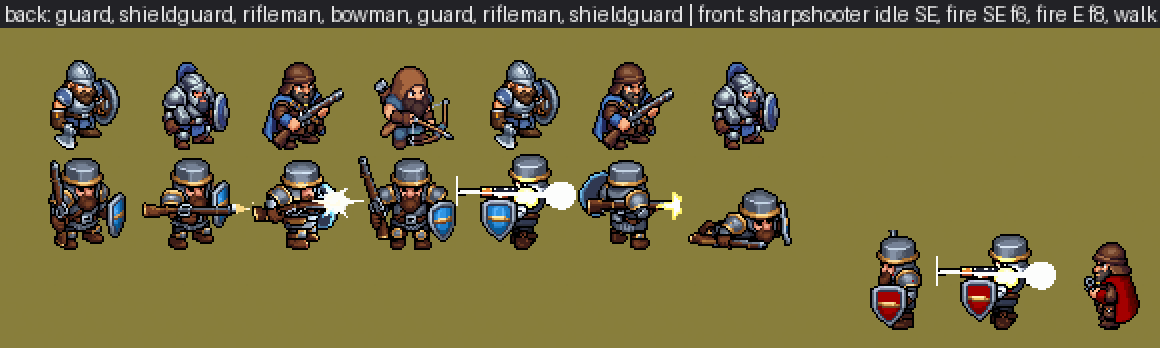
What came back
The look is a flat-topped, brass-rimmed pot helm, steel pauldrons, a blue heater shield on the left arm and a long rifle. Walk and death animate in all eight headings. The attack is clean in five: one readable release, a muzzle flash along the facing, the shield held, then a reload beat.
What did not
In the south, south-west and north headings the model levelled the rifle toward screen-right regardless of where the unit faces. Those three are flagged, not imported, and the lane stopped at 39 of its 40-generation budget rather than roll the dice again.
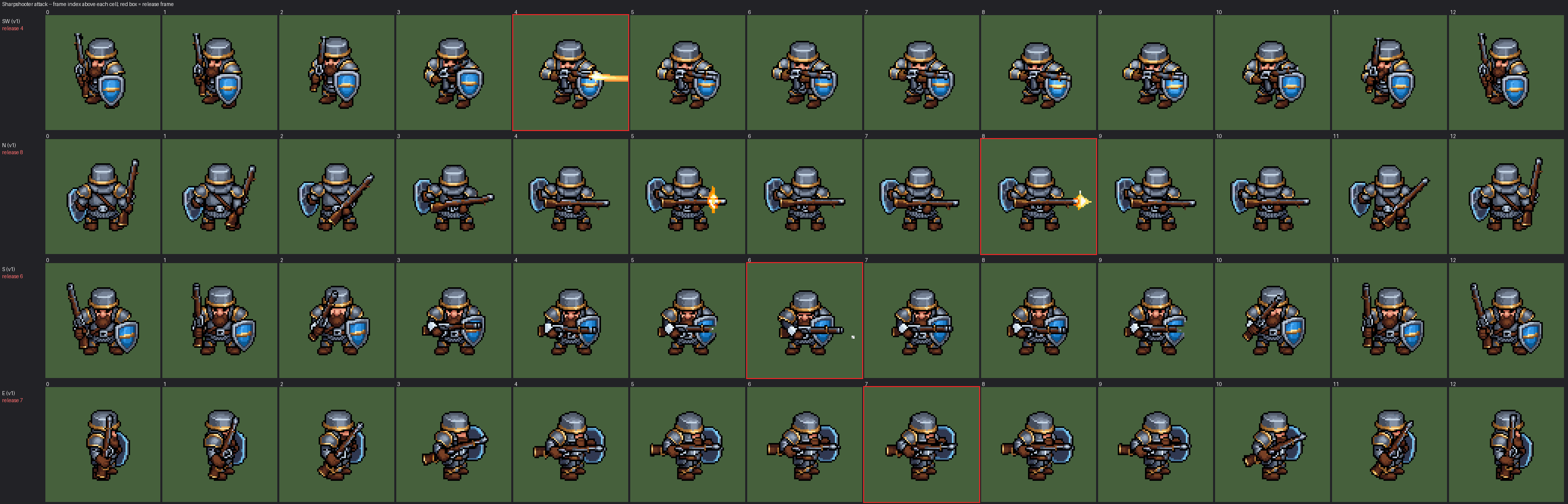
This is what most art work on the project looks like: a sheet with the failures on it, measured (foot baseline, canvas per heading, stride, team-colour recolour), and a decision about what is good enough to go in the game.