Every enemy in the first four missions is a neutral slot with an enemy stance and a script. The King's Toll is different: the Warden who holds the Greywater crossing is the campaign's first true computer player, running a policy-driven base of its own, neutral at the start and hostile only if provoked.
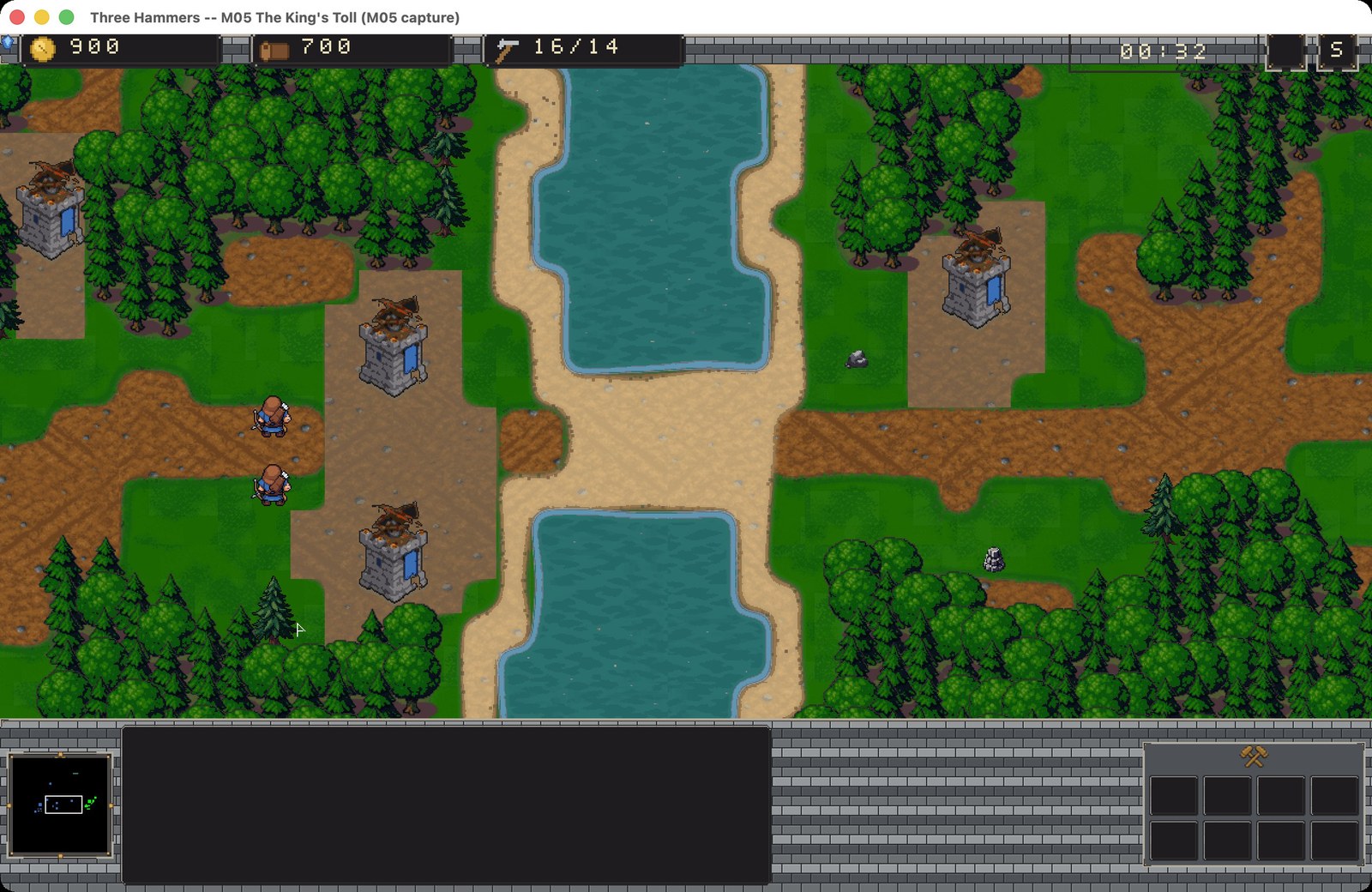
Four ways across
You need to get carts across the river. You can pay: train a Toll Bearer, load three thousand gold, and walk it to the table. You can earn favour by breaking the outlaw camp at Crow Hollow and bringing Rill to the table. You can find the Drowned Ford and take the long way round by the Fenwood track. Or you can take the bridge, by force, through the towers or around the flank. Whatever you do, the Reivers raid your carts.
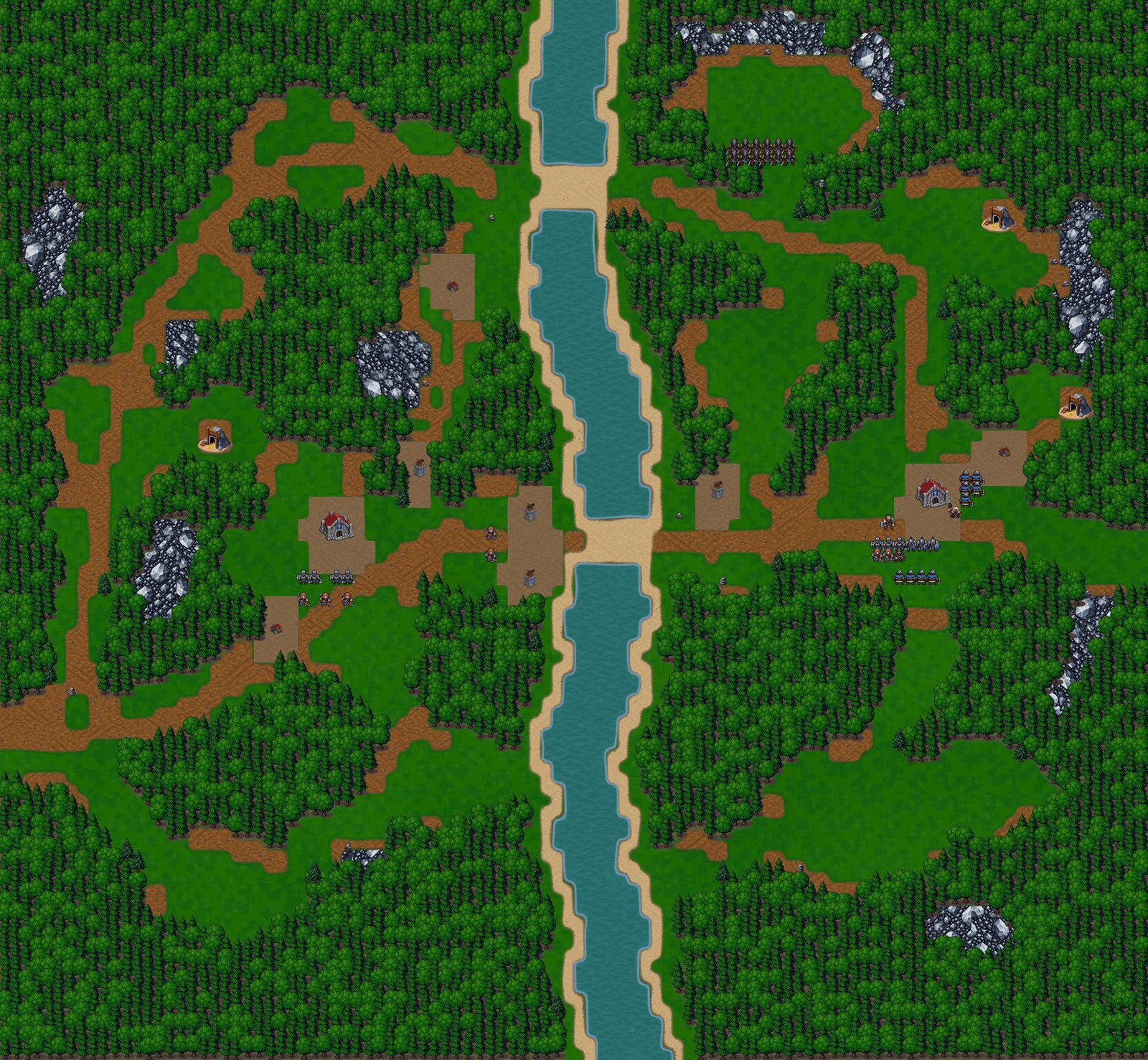
How much of it is proven
Eighteen scripted scenarios pass on the native engine, including the war switch: a neutral computer player turning hostile mid-mission, from a running trigger, and staying hostile through a save and reload. That switch was measured in its own lane before the map was built, because it was the one thing the design depended on that nobody had seen the engine do.
Two honest caveats. The Warden's levies are scripted, not a strategic economy, for now. And the human units and buildings you would meet here are placeholders wearing the Warden's colour; the real ones are in the next chapter.
One hard lesson from this map for every builder after it: a mission with roughly 250 triggers or more writes a save file the engine cannot load again. This one is capped at 150.