An RTS tells you what happened through pixels. If a heal lands and nothing changes on screen, the player assumes it failed. If a ward is active and the unit looks the same, the player cannot plan around it. Both of those were true of Three Hammers until this week, and the command panel still had grey tiles that said "W2" and "E3" where icons should be.
Mend lands on the unit
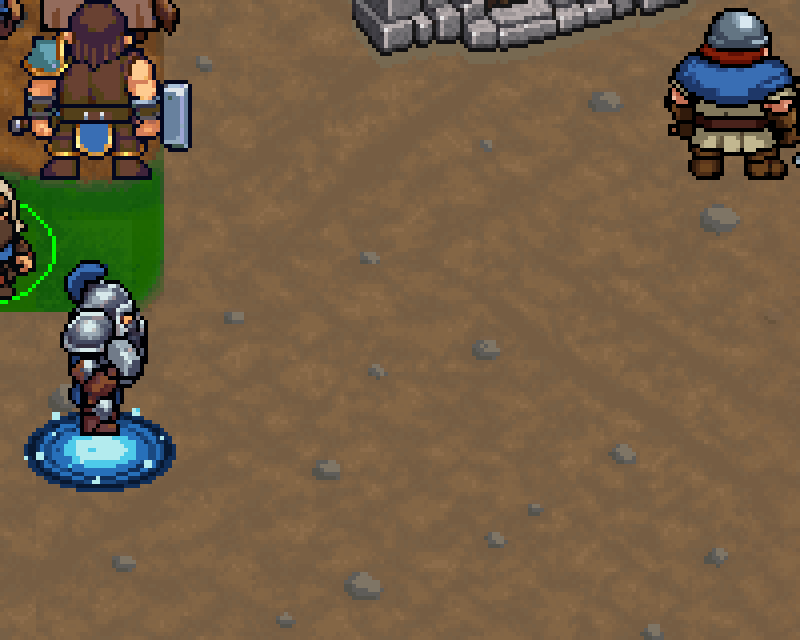
Mend now spawns a short effect on the unit that was healed, once per accepted cast and once per automatic heal, never on a target the spell refused, and never twice. That last clause is not decoration: the engine has no way to count live effects from a script, so the lane saved the game every five cycles and counted the effects in the save files. Two hundred and fifty-one headless checks, two identical runs.
A ward you can see for as long as it works

Rune of Warding gives a unit a timed armour bonus for three hundred cycles. The cast now has a flourish, and the warded unit carries a glyph for exactly as long as the bonus lasts. Getting "exactly" right took a comparison of four mechanisms. A looping effect with a timer drifts and keeps playing after the unit dies. A target-following effect duplicates on recast. A script that respawns the effect needs bookkeeping that does not survive a saved game. The winner was the engine's own decoration system: a sprite drawn whenever a unit variable is non-zero, which reads the ward's timer every frame, vanishes when it expires or the unit dies, and comes back after a reload without anyone cleaning up.
The mechanics did not move while this was done. All two hundred and thirty command-state checks from the previous week report identical values.
No more grey tiles
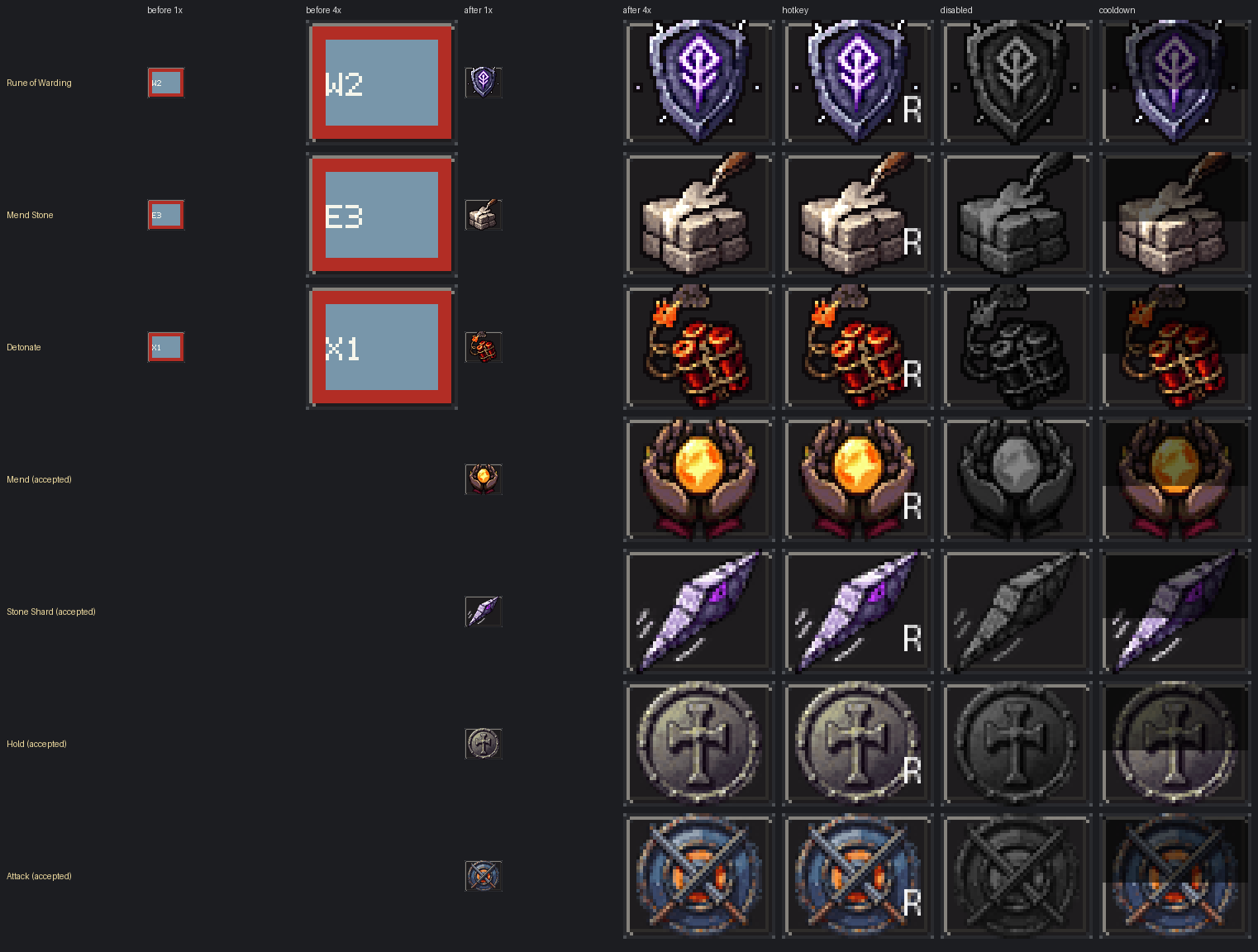
The command panel's icons went through an audit that separates two questions the project used to blur: is the icon wired, and is it real art? The audit reads every registered icon and flags placeholders by their pixel signature. On the first pass it found seven, plus two wall tiles nobody had reported. Rune of Warding, Mend Stone and Detonate were drawn in the style of the accepted spell icons. The Runesmith, Sapper and Ironguard Champion took crops of their approved concept art. Garrick Ironline's icon existed but was not wired, and was wired in a follow-up.
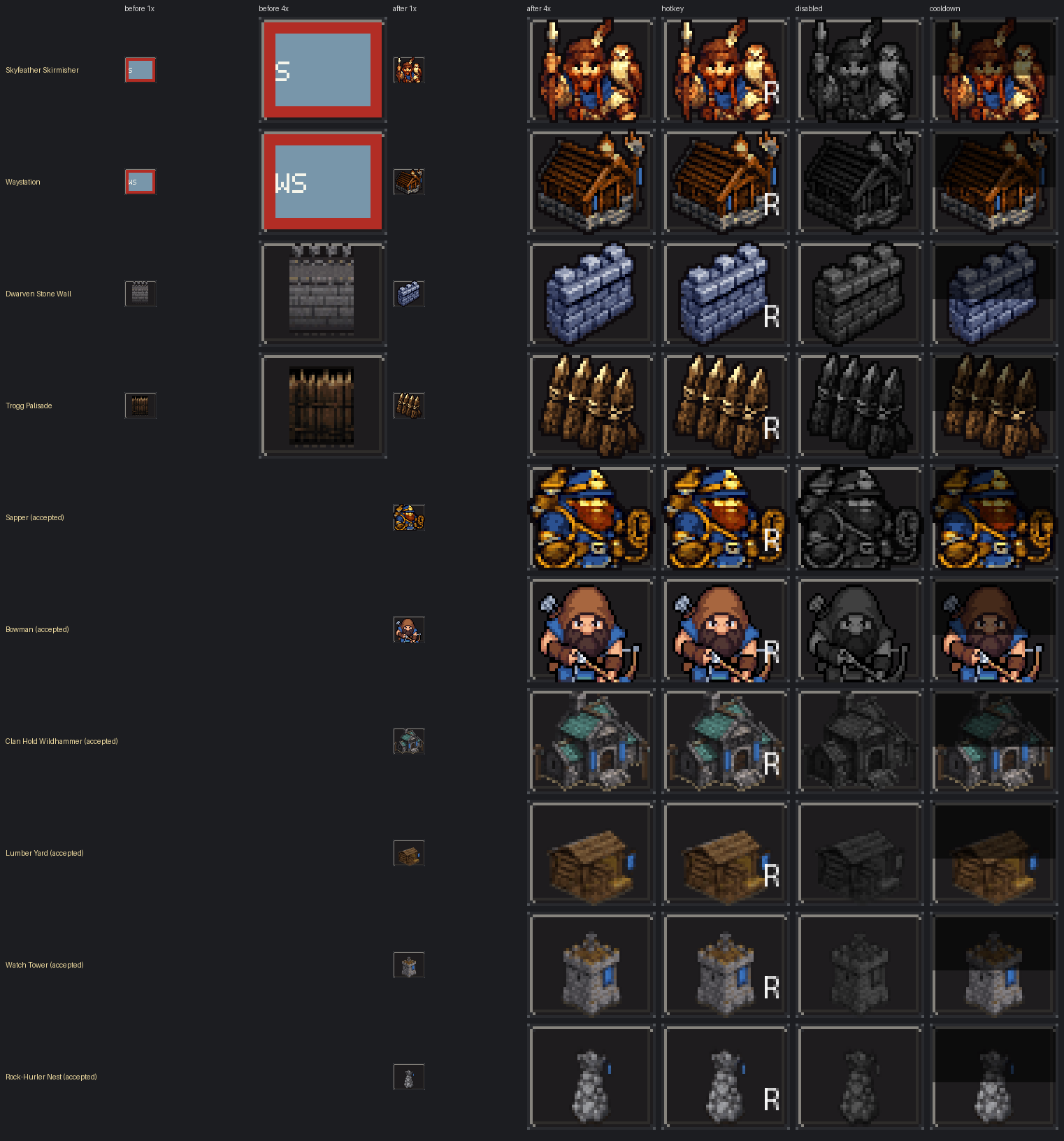
The final pass drew the last four. The audit now reports zero placeholder icons in the running game, and it runs on every build so the number cannot quietly go back up.
What is proven and what is judged
The headless runs prove the effects spawn on the right unit at the right time and that the glyph's timer, expiry and reload behave. Whether it looks right was judged by eye in a window, from the capture plan the lane wrote for exactly that purpose. Both spells' records stay at review until a human plays with them.