The last chapter ended with the campaign's structure finished. Every mission was playable and every route reached an ending, and the next step was supposed to be playing it. That step is still coming. In between, the project took on something new: a versus mode, for the person making this game and a few friends.
The decisions were made up front:
- Versus, not co-op. Players fight each other or the computer.
- Friends only. There's no store, matchmaking or accounts. Players connect directly over a private network.
- Friends play on Windows, so the game has to run there, and a Mac and a Windows PC have to agree on every step of a match.
- Every race the game has should be playable. One-on-one comes first, then two against two.
- Any slot can be a human or the computer.
Making two computers agree
A real-time strategy game played over a network works in lockstep. Each computer runs the whole simulation itself, and only the players' orders travel between them. That keeps the network traffic tiny, but it means both computers must make exactly the same decisions, cycle after cycle, or the game quietly turns into two different games.
The first thing built was therefore a test, not a feature. Two copies of the game ran side by side on one machine and played scripted matches against each other, comparing a fingerprint of the whole game every few seconds. It found real problems. One was an order arriving after the unit it named had already died. Another was a builder inside a gold mine leaving a stray mark on the map, on only one of the two computers. Those fixes became a new version of the engine, now used everywhere, campaign included.
When the two copies do disagree, the game now stops at once and says so. It names the moment it happened and keeps a snapshot of both sides for diagnosis.
Seven races
The campaign is about dwarves, so the dwarves came first: the three clans, Bronzebeard, Wildhammer and Dark Iron, each with its own units and its own way of playing. Then four more peoples were made playable, each designed as a full race with workers, buildings, an army and casters:
- The Marcher Lords, a human border realm of militia, pikemen, knights and clerics.
- The Rift Host, fire and stone elementals. Their economy works differently: income rises from vents in the ground rather than from gathered gold and timber.
- The Troggs, cave-dwellers of bone, hide and rock. They grunt instead of talk.
- The High Elves of the Glasswood Company, a small, expensive, elite force of blades, archers and wardens.


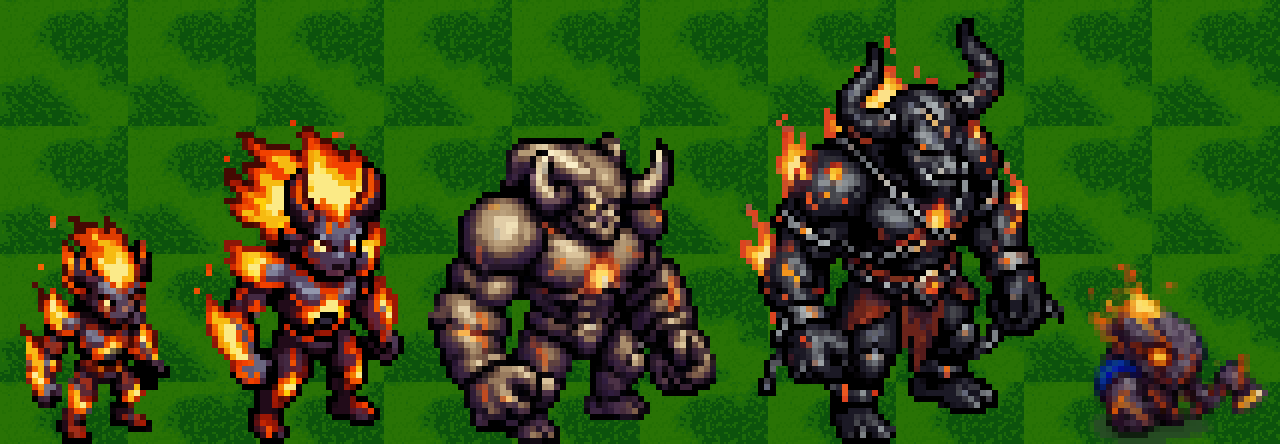


All of it is original pixel art, generated under direction and reviewed at play size. Each race also got its own sounds: weapons, spells, deaths, and the noise of its buildings going up.
A computer opponent for any race
The campaign's computer opponents are written for one mission each. Versus needs one that can start from an empty map with any race, then build, gather, expand, research and attack. There are now two levels, Easy and Normal. The bar each race had to clear was that Normal beats Easy in most games, across every map.
Not every matchup is even yet. The High Elves stall on one map, and the Marcher Lords once lost to an Easy opponent they should have beaten. Those are noted for tuning.
The Hall of the Clans
Players meet in a lobby: pick a map, take a seat, choose a clan and a team, say you're ready, and the host starts the game. Each seat can be a friend, the computer on Easy or Normal, or closed. The screens were restyled as a torch-lit dwarven hall, which is where the chapter title comes from.
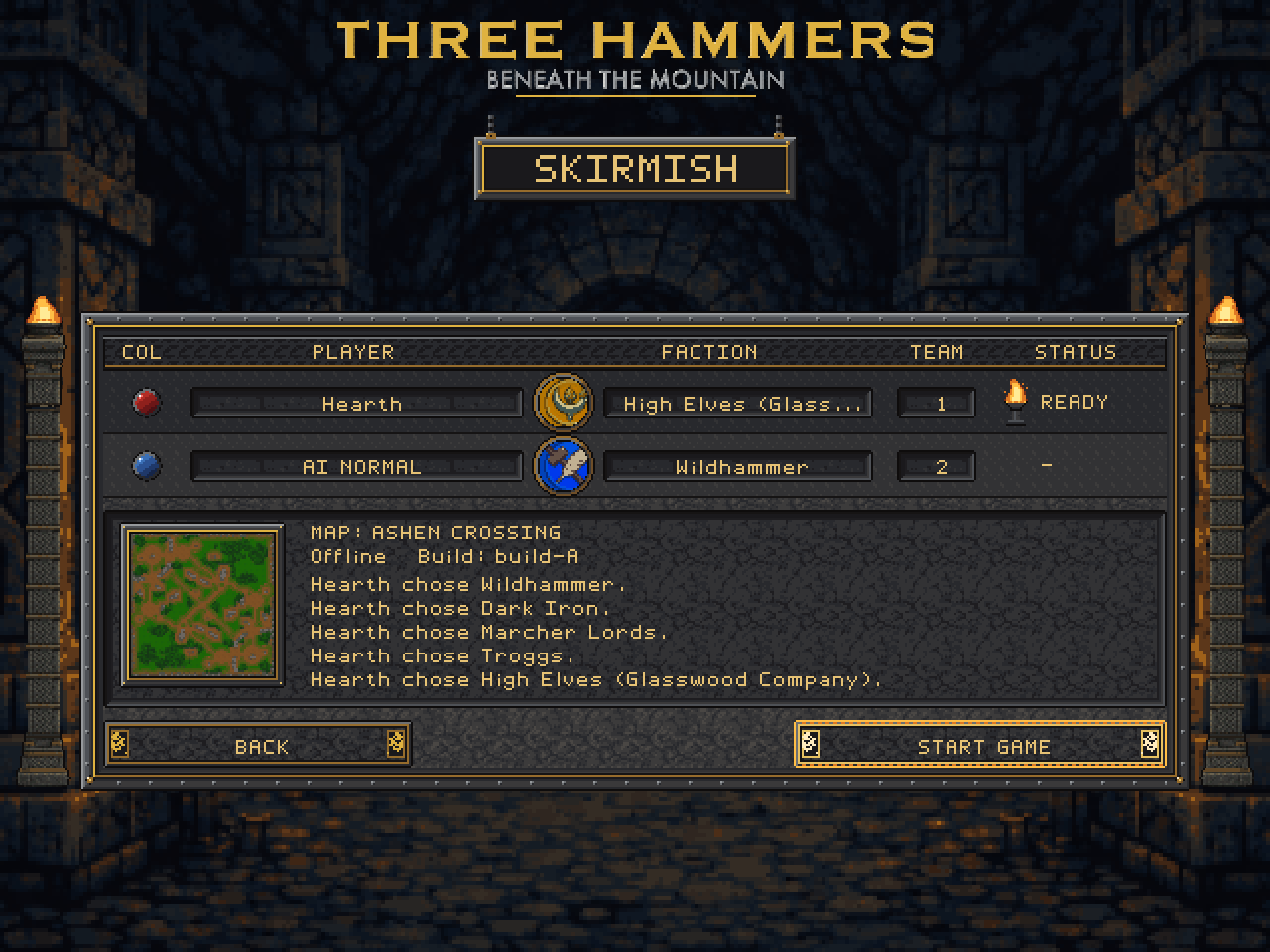
There are three maps so far, each for two players. None of them has room for four yet, so two against two is waiting on a new map.
To prove the whole chain works, every race played complete matches by itself, from the menu through the lobby and the battle to the results screen and back. Each match was run twice and came out identical both times, and two-computer matches stayed in step to the end. That is automated testing, though, not people playing. Nobody has sat down with a mouse for a versus game yet.
First contact with Windows
Until this week the game had only ever been run on a Mac. The first Windows build was packaged, installed on a real Windows PC, and launched. It worked. Then it was played, and the playtest notes were blunt:
- "The dwarf sounds are all way too comical." Mining, chopping and building sounded like toys, and many weapon hits rang like bells instead of landing like weapons.
- "The current [narrator] is too robotic."
- The volume settings didn't stick.
- The game froze halfway through the first Dark Iron mission, on a move order.
Each became its own piece of work.
The narrator. Four new synthetic narrator voices were designed and auditioned, each reading the same two briefing passages. They are original voices, not imitations of anyone. The pick was the one called Stonewright: a deep voice with a strong Highland accent, brisk and grave. Every narrated line in the campaign has been re-recorded with it, two hundred and thirty-eight in all.
The sounds. The dwarves' worker and melee sounds were redone over three rounds of listening. The first round was still too tinny, high-pitched and hollow. The second round added real recordings from Freesound beside the generated ones, licensed CC0 or CC-BY with every source recorded and credited. It also cut the thin high end out of every candidate. Sixteen sounds were chosen in the end. Six of them are real recordings: a pickaxe on rock, a hammer on wood, the swings of axes and picks. The rest are generated takes that finally sound heavy.
The volume. The settings sliders moved when dragged, but never applied or saved the change. They also only ever reached about forty per cent of full volume. Both are fixed.
The freeze. This one is not solved. The logs show the moment: a Dark Iron bombard barrage, a couple of minutes after the player's commander fell. But the last lines of the log were lost when the game was closed, and no amount of replaying that battle on a Mac would freeze it. So the next build carries its own witness. If the game ever stops responding for fifteen seconds, it writes down exactly what it was doing and saves a snapshot for diagnosis. Its logs are also now written as they happen, so the last lines can't be lost.
What's next
All of the above goes into the next build. A Mac and a Windows PC then play each other for the first time, and after that comes a first evening of one-on-one with friends.