The last chapter ended in the Glasswood, with the tenth mission playable and its elves still borrowed sprites. Since then the rest of the campaign has been built. All eighteen missions now play from the first order to the victory screen, and the choices between them branch the way the story says they should.
Every one of them is still a graybox: the shape of the mission is in place, along with the objectives, the waves, the dialogue triggers and the map. Much of the art and nearly all the tuning are not. Structure first, quality after.
The whole campaign, end to end
The campaign is a graph rather than a list. The first three missions are shared. After that, an allegiance choice sends the player down one clan's road, and later choices decide which ending they reach. Proving that the graph holds together means running it: automated playthroughs that start a fresh profile, win each mission, save, load and carry the army forward, checking hundreds of facts along the way. These include which mission comes next, what the player keeps and what the briefing says.
There are four of these routes, one for each main path through the story, and all four reach an ending. That was the milestone this period: the campaign's structure is finished. What remains is making each mission good.
Effects you can see and hear
Nine of the dwarves' abilities got proper layered effects:
- Lay Mine
- Storm Gust
- Ram Charge
- Tunnel Charge
- Rally the Hold
- the Forge-Hammer Throw
- Stone Shard
- Wall Mend
- Field Repair
Each was built the same way as the spells in an earlier chapter. Each effect is assembled from separate pieces, such as the flash, the debris and the lingering mark, timed to the moment the ability actually lands.
The three clips below were recorded on the project's ability test field, a bare stretch of ground used to check effects, rather than in a mission.
They also got sound. The project's rule for sound effects is that they are original work or come from Freesound clips licensed CC0 or CC-BY, cut and mixed for the game, with every clip's source recorded and every CC-BY clip credited. A thrown hammer now whirs in flight and lands with a thud, and a tunnel charge hisses before it goes off. All of it plays at the position where it happens on the map, not at full volume everywhere.
Underneath, the engine moved to a new build with two fixes that matter more than they sound: saves are now written atomically, so a crash mid-save can no longer leave a broken file, and a fix to how the engine keeps track of script references removes a source of rare crashes.
Deciding what "done enough" means
With the campaign in place, the next question was scope. The original roster plan has more units and buildings than the campaign uses. The decision this week was that the first complete version of the game is the campaign as built, plus the forge's upgrade lines. The rest of the roster stays designed and on file for later, not deleted.
That made the forge the last piece of game design work before playing.
The forge
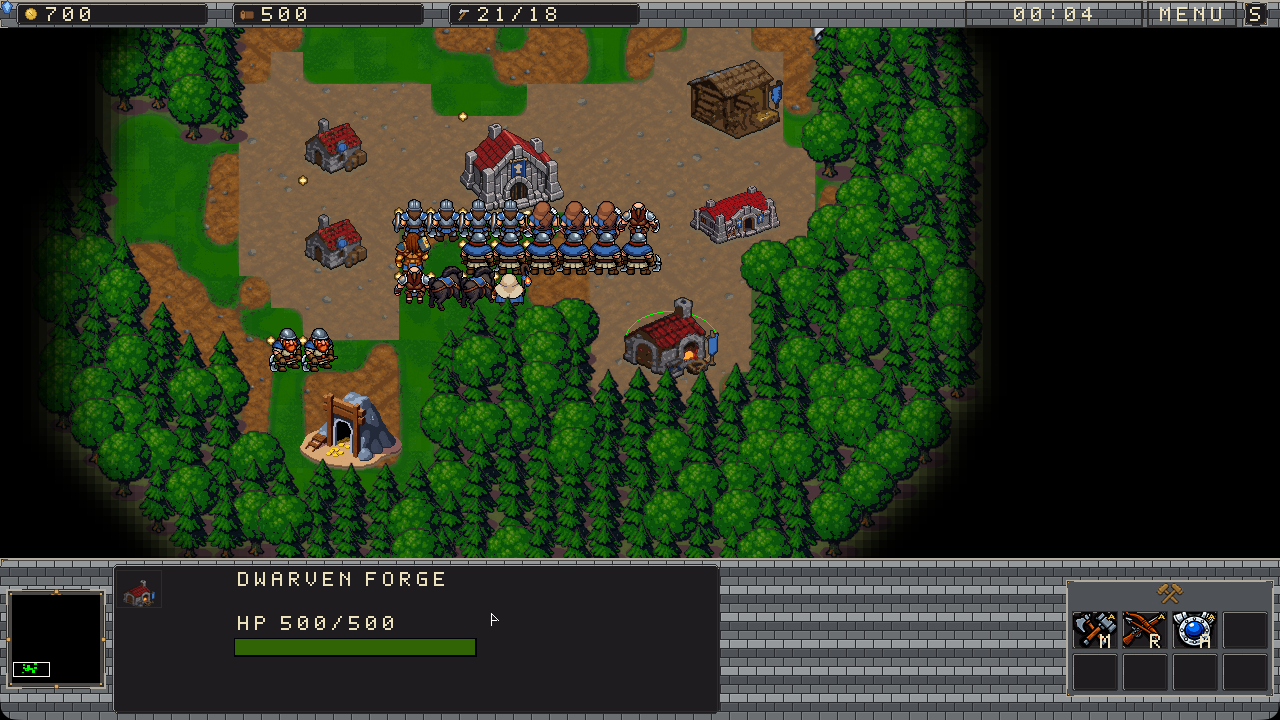
A dwarven army should get better at its trade as a campaign goes on. Until this week it didn't: the dwarves could build a Forge, and there was almost nothing to research in it.
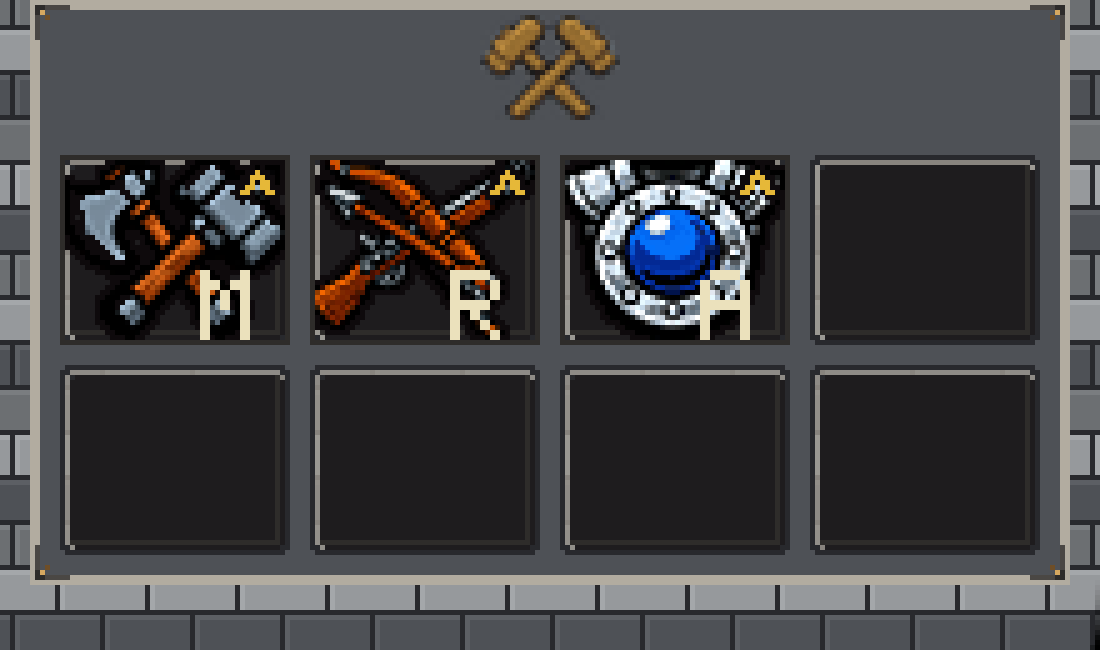
There are now five shared lines, available to whichever clan the player follows:
- Melee weapons, in two tiers.
- Ranged weapons, in two tiers.
- Armour, in two tiers.
- Building armour.
- Caster training, researched at the Rune-Hall.
The Bronzebeard road also gets two of its own. Reinforced Plate is now offered on that road too. The new Siege Engineering, researched at the Foundry Annex, gives the Siege Engine one more tile of reach for the assault that ends that road.
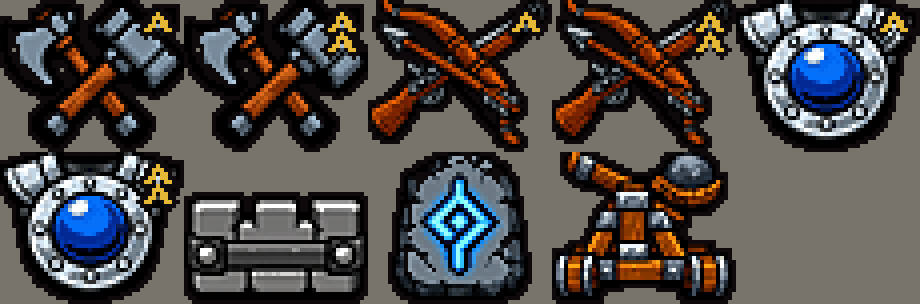
The icons above are candidates, not accepted art. They were generated under direction for about twenty-six cents, and the second tier is drawn by adding a second gold chevron to the first, so the two read as one line at a glance.
Each upgrade appears only in the missions where the plan schedules it, and only alongside the building that researches it. The first test of that schedule was an arithmetic one: in most missions the full set of offered research costs a few percent of the gold in the map's mines, and in the tightest it costs about a seventh. Whether that feels right is something only playing can answer.
The enemy does not research anything. That is deliberate for now and noted.
Keeping each clan its own
While checking the upgrades, the project found that some missions offered units and buildings belonging to a different clan from the one the player chose. For example, a Bronzebeard mission let the player build Wildhammer gear. Nothing in the design asked for that, and it blurred the one thing that should make each road feel different.
Missions now offer only their own clan's pieces, plus the shared dwarven roster. Where a later mission is meant to unlock something, it now appears there and not earlier. The one deliberate exception is a Wildhammer waystation that a Bronzebeard mission uses as its forward gold depot, because the mission's story is built around it.
The map builder
The visual map editor is a core part of the project, so this period it went through a full qualification run:
- a new mission built in it from nothing, with terrain, units, an upgrade, a compound objective and two briefing variants;
- that mission saved, reopened, exported and booted in the game, with everything placed matching what the engine loaded;
- an existing mission edited the same way, without touching the shipped copy.
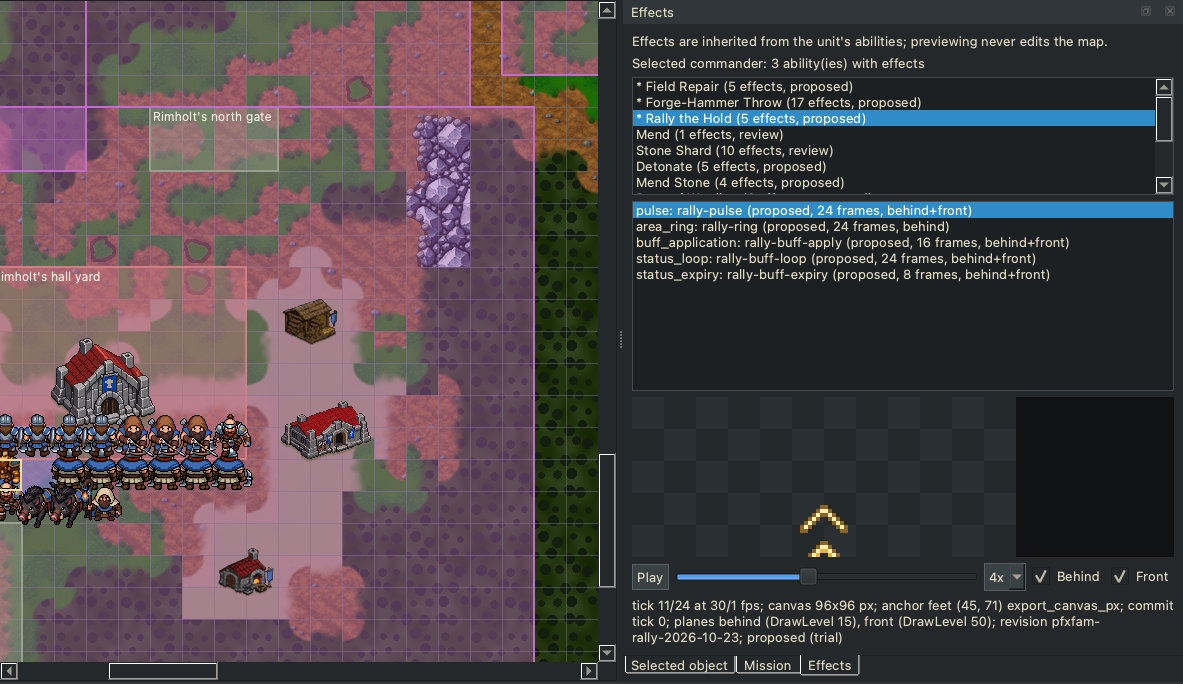
It now also has a read-only panel that previews each ability's effects, and an offline package that installs and runs without fetching anything from the network.
Three mistakes worth recording
Each piece of work here is built separately and checked before it joins the main line of the game. This week, three times, a piece joined after passing the checks that seemed relevant to it, and broke something it did not obviously touch:
- A button fix tripped a file guard. Making the results screen's buttons readable changed a game file that a guard test watches.
- Map records went stale. Rebuilding maps left the editor's records of those maps out of date.
- A new upgrade crashed the campaign. Its internal name broke the way the campaign loads research, and the game exited before the first menu.
Each was caught by the very next piece of work, before it reached anyone, and fixed the same day. The lesson is now a rule: what gets checked depends on what a change touches, not on what it was meant to change. Anything touching the campaign's scripts now runs a full campaign route before it lands.
What happens next
The plan now is to stop building and play. A review build of the whole campaign exists, and the next one will include this week's upgrades. The milestones that matter from here are human ones:
- a full playthrough;
- timed playtests against the target of fifteen to twenty minutes of active play per mission;
- art reviews of everything still marked candidate;
- a first run on Windows.
All the checks above prove the game is coherent. They don't prove it's fun. Only playing it can do that.